Machinecode (1940s-1950s)
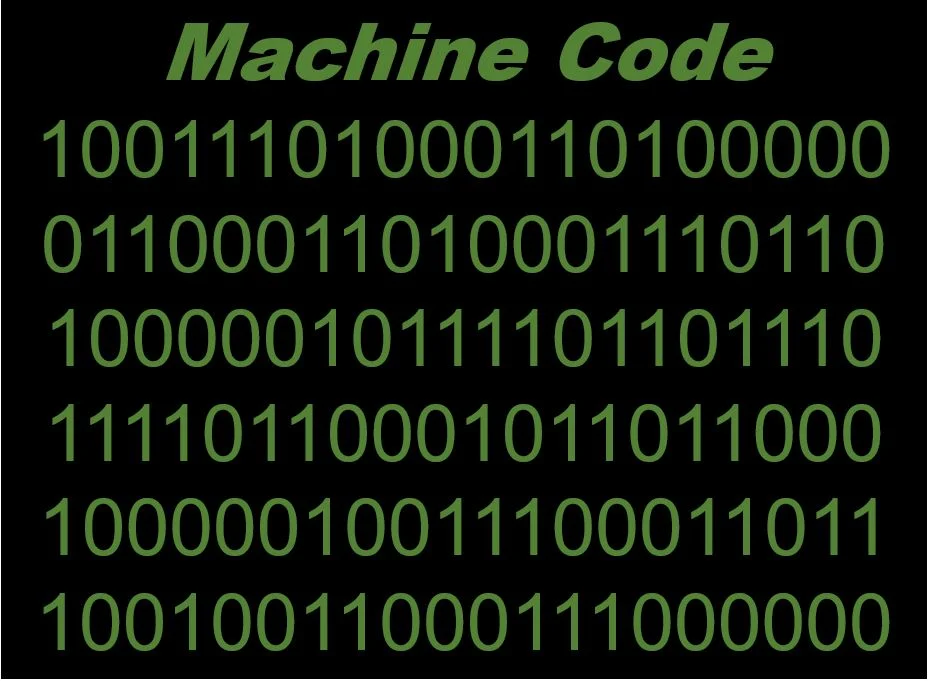
Machinecode Image

Year: 1940s-1950s

Developer(s): N/A

Specific Characteristics: Machine code represents the very first programming language ever created. It consists of binary instructions understood by computers without any intermediate translation. Each command corresponds to a specific operation on the hardware, making it the most primitive form of programming.


Assembly Language (1950s)

Assembly Language Image

Year: 1950s

Developer(s): Various

Specific Characteristics: Assembly Language is a low-level language that directly communicates with computer hardware. It uses symbolic representations of machine code instructions, making it easier for programmers to understand and communicate with the hardware. This language is often used for programming on a specific architecture.

Fortran (1957)

Fortran Image

Year: 1957

Developer(s): John Backus

Specific Characteristics: Fortran, short for "Formula Translation," was the first higher-level programming language ever developed. It was specifically designed for scientific and technical computations and introduced concepts such as arrays and loops, making complex calculations easier to perform.

Lisp (1958)

Lisp Image

Year: 1958

Developer(s): John McCarthy

Specific Characteristics: Lisp is known for its focus on symbolic processing and early development in artificial intelligence (AI). It supports recursion and has powerful list processing capabilities, making it well-suited for symbolic manipulation and the creation of AI algorithms.

COBOL (1959)

COBOL Image

Year: 1959

Developer(s): Grace Hopper, ANSI

Specific Characteristics: COBOL, which stands for "Common Business-Oriented Language," was designed for business applications. It is still in use in financial systems and other business-critical software due to its emphasis on readability and comprehensibility.

BASIC (1964)

BASIC Image

Year: 1964

Developer(s): John G. Kemeny, Thomas E. Kurtz

Specific Characteristics: BASIC, an acronym for "Beginner's All-purpose Symbolic Instruction Code," was created to make programming accessible to beginners. It has a simple syntax and is often used in education and for creating simple programs.

C (1972)

C Image

Year: 1972

Developer(s): Dennis Ritchie

Specific Characteristics: C has been influential in system software development due to its efficiency and portability. It provides a powerful set of features and is often used for writing operating systems and embedded software.

C++ (1983)

C++ Image

Year: 1983

Developer(s): Bjarne Stroustrup

Specific Characteristics: C++ is an extension of C with object-oriented capabilities. This allows programmers to build complex software using objects and classes, and it is popular in game development and system software.

Java (1995)

Java Image

Year: 1995

Developer(s): James Gosling, Sun Microsystems

Specific Characteristics: Java was designed for platform-independent development, allowing the same code to run on different operating systems. It is often used for web and mobile applications.

Python (1991)

Python Image

Year: 1991

Developer(s): Guido van Rossum

Specific Characteristics: Python is known for its readability and simple syntax, making it an excellent choice for beginners. It is versatile and has a broad community support, contributing to its popularity.

JavaScript (1995)

JavaScript Image

Year: 1995

Developer(s): Netscape Communications Corporation

Specific Characteristics: JavaScript is the standard language for web development, allowing developers to create interactive web pages. It runs in the browser and provides dynamic functionality.

Ruby (1995)

Ruby Image

Year: 1995

Developer(s): Yukihiro Matsumoto (Matz)

Specific Characteristics: Ruby is known for its elegance and productivity. It is popular for web development and scripting and has a strong community of users and developers.

PHP (1995)

PHP Image

Year: 1995

Developer(s): Rasmus Lerdorf

Specific Characteristics: Originally designed for web development, PHP is widely used for creating dynamic web pages. It is tightly integrated with web technologies such as databases and HTML.

C# (2000)

C# Image

Year: 2000

Developer(s): Microsoft

Specific Characteristics: C# was developed by Microsoft and is popular for Windows applications and game development. It offers powerful capabilities for building desktop and server applications.

Go (Golang) (2009)

Go (Golang) Image

Year: 2009

Developer(s): Google

Specific Characteristics: Go is designed for efficiency and scalability and is popular for web and system development. It provides strong support for concurrency and simple language constructs.

Rust (2010)

Rust Image

Year: 2010

Developer(s): Mozilla Research

Specific Characteristics: Rust is designed for system programming with a strong emphasis on safety and performance. It offers features to prevent memory errors and data races.